
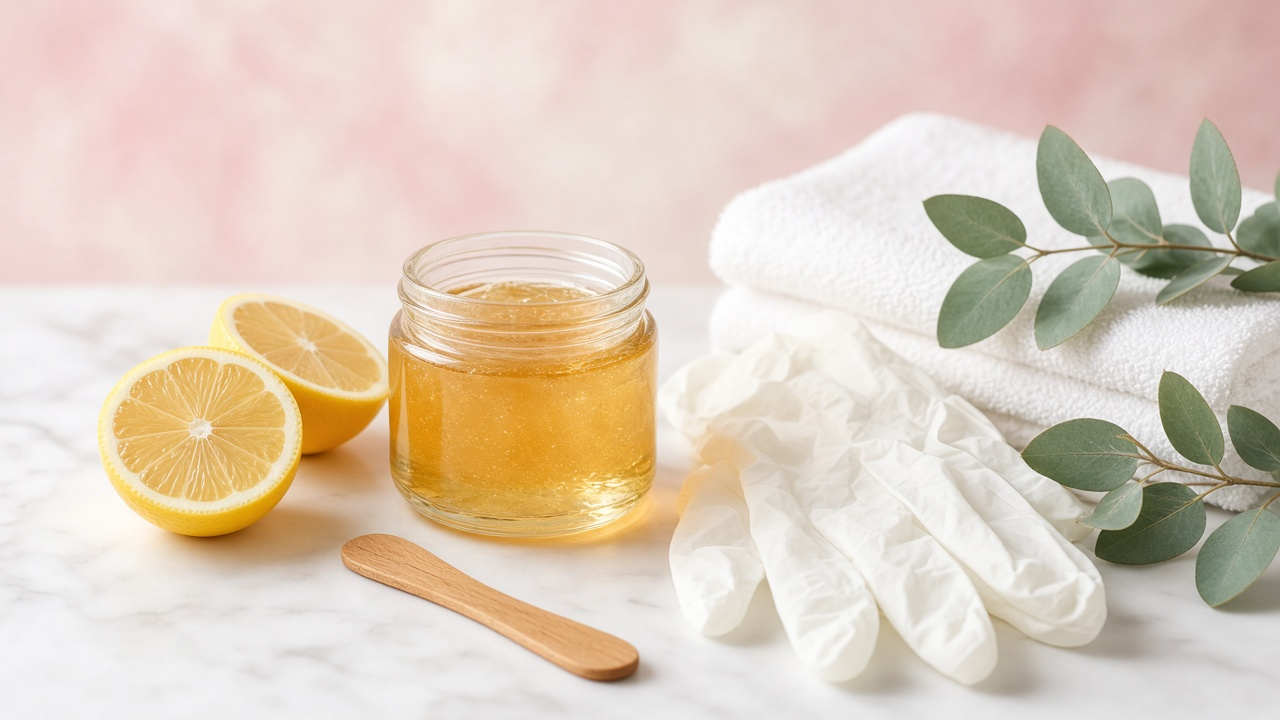
Searches for how to make sugaring wax at home have exploded lately, and it’s easy to see why: sugar, lemon and water sound simple, cheap and natural. But anyone who has tried sugaring at home knows the recipe is the easy part. The hard part is everything the recipe doesn’t mention. This guide gives you an honest look at what’s realistic to do yourself, where DIY tends to go wrong, and when it makes sense to let a professional take over.
At Sugaring & Waxing by Ervina in Sherman Oaks, our specialists offer professional sugaring every day, so we see plenty of first-timers who tried it at home first. If you’re still deciding between methods in general, start with our post on sugaring vs. waxing. This article is about something different: DIY versus a trained hand.
Why everyone is searching for a sugaring wax recipe
Sugaring paste is made from ingredients most people already have in the kitchen, and videos make it look effortless. A jar of paste, a quick flick and smooth skin. It’s also appealing because the paste is water-soluble and has no added resins, which many people with sensitive skin find gentler. That part is true. What the videos skip is how much practice the technique takes.
The general idea behind homemade sugaring paste
In broad terms, sugar is heated with an acid (usually lemon juice) and water until it caramelizes into a thick, pliable paste, then cooled until it can be handled. We’re intentionally not sharing a step-by-step recipe here, because the details matter a lot and small mistakes cause most DIY problems.
Why the “simple” recipe is harder than it looks
- Temperature is unforgiving. A few degrees too low and the paste stays runny and won’t grip hair. Too high and it turns hard and brittle like candy.
- Consistency changes with your kitchen. Humidity, the pan, your stove and even the sugar you use all change the result, so the same recipe can behave differently each time.
- Testing temperature on skin is guesswork. Freshly cooked sugar holds heat far longer than people expect.
The real risks of sugaring at home
None of this means DIY is forbidden. It just means it helps to know what can go wrong before you start.
Sugar burns
Hot sugar sticks to skin, so it can cause a more serious burn than many people expect. Always let paste cool well before it touches skin. If you do get burned, cool the area under cool running water and see a doctor or urgent care for anything that blisters, is larger than a small spot, or is on a sensitive area. Don’t try to treat a significant burn at home.
Broken hairs and patchy results
Professional sugaring removes hair in the direction of growth with a quick, controlled flick. Without practice, it’s common to pull at the wrong angle, which can snap hairs at the surface instead of removing them from the root. The result is stubble within days and a patchy finish.
Bruising, irritation and ingrown hairs
Going over the same spot again and again, pulling skin without holding it taut, or reusing paste on large areas can leave skin red, sore or bruised. Broken hairs are also more likely to grow back under the skin. If ingrowns are already an issue for you, our guide on preventing ingrown hairs is worth a read.
The flicking technique: the part videos make look easy
Sugaring isn’t just paste. It’s a hand technique: the paste is pressed into the skin against the hair growth and then flicked off in the direction of growth while the skin is held firmly. Getting the angle, speed and skin tension right at the same time is what takes professionals many hours of practice. At home, most people find their first attempts slow, sticky and frustrating, and that’s completely normal.
Can you do a DIY Brazilian wax or sugar at home?
This is where we’d gently say: please don’t start here. A DIY Brazilian wax or sugaring session means working on delicate skin, at awkward angles, in areas you can’t see well and can’t hold taut on your own. That combination raises the chances of burns, bruising, broken hairs and irritation. Even people who sugar their own legs comfortably usually leave the bikini area to a professional. If you’re curious about the difference between bikini options, see our post on bikini wax vs. Brazilian wax.
What’s realistic to try at home
If you want to experiment, keep it low-risk:
- Start with an easy, visible area such as the lower legs or forearms, where you can see clearly and hold the skin taut.
- Do a small patch first and wait a day to see how your skin reacts.
- Let the paste cool thoroughly and test it on a tiny area before applying.
- Skip anything that’s irritated, sunburned or broken, and avoid areas where you use strong exfoliating or retinoid products unless your doctor says it’s fine.
- Stop if it hurts more than expected or the skin starts looking angry.
Why professional sugaring is different
Our specialists work with professionally prepared paste at a consistent, skin-safe temperature, and with a technique practiced on hundreds of clients. That means hair is removed in the direction of growth, skin is supported the whole time, and the same area isn’t worked over and over. Hard-to-reach areas like a Brazilian are handled quickly and hygienically, and you leave with aftercare advice suited to your skin.
Planning your first professional visit
Hair length matters for a good result, so if you’ve been shaving or experimenting at home, give your hair time to grow out before you book. Our guide on how long hair needs to be explains what to aim for.
DIY vs. professional at a glance
- Cost: DIY ingredients are cheap, but failed batches, wasted time and redo sessions add up.
- Results: At home, broken hairs and patchy spots are common while you learn. A trained specialist aims to remove hair from the root for a cleaner finish.
- Safety: Homemade paste carries a real burn risk. Professional paste is used at a controlled temperature.
- Areas: Legs and arms are reasonable to practice on. Brazilian, bikini and face are best left to a professional.
Frequently asked questions
Is sugaring at home safe?
The short answer is yes, for easy areas, if you’re careful. Let the paste cool fully, patch test first and start with your legs or arms. The biggest risks are burns from hot sugar and irritation from poor technique.
Is a homemade sugaring wax recipe the same as what salons use?
The basic ingredients are similar, but professional paste is made to a consistent texture and used with a trained technique. That consistency is a big part of why the results differ.
Can I do a DIY Brazilian at home?
We don’t recommend it. The area is delicate and hard to reach on your own, which raises the risk of burns, bruising and broken hairs.
What should I do if I burn myself with sugar?
Cool the area under cool running water and see a doctor or urgent care for any blistering or larger burn. Don’t sugar that area again until it has fully healed.
Can I come in after trying sugaring at home?
Absolutely. Just let your hair grow out and make sure your skin is fully calm, with no irritation or broken skin, before your appointment.
Ready to leave the sticky part to us?
Trying sugaring at home can be a fun experiment, but for smooth, comfortable results, especially in delicate areas, a professional makes a real difference. Our specialists at Sugaring & Waxing by Ervina, 13605 Ventura Blvd in Sherman Oaks, are happy to answer your questions. Get in touch to book your sugaring appointment.